by Jack Kelleher
The village lay still. Ground fog eddied around Frankie’s feet as he and Charley rolled their bikes out of the clapboard garage into the velvety dark. The only light came from a scatter of stars and the headlamps of an occasional car. It was 3:30 in the morning. They were beginning their first long ride.
Frankie’s grandmother, Mrs. Pena, gave them Ovaltine, hot oatmeal, and the lunches she had packed. They ate quickly, eager to be on their way, but both thanked the old woman before leaving her table.
Moments later, Flora Pena stood in the yellow porch light watching as her boys rolled silently away, turned the corner, and were lost in the night. Crossing herself, she whispered, God bless you. A moth flew into her face; she brushed it away, wiped her eyes with a tea towel, and went back into the kitchen.
In the dark, the boys’ puny lights penetrated only a few feet. Unseen dogs barked as they passed. They shared the streets with milkmen, barmaids, and night janitors driving home. Outside town the road emptied, an endless black ribbon unrolling before them.
Charley had his bedroll tied between ape-hanger “Harley” handlebars. Frankie’s was lashed to a steel paperboy’s rack.
As morning twilight grew, they pedalled across the San Gabriel Valley, over the Coast Mountains, and west along old California Route 39. The country was still rural then—truck farms and orange orchards punctuated by quirky hamburger stands and beer joints.
Franchised fast food was in its infancy. The future Disneyland was an orange grove. Knott’s Berry Farm, barely an amusement park, sold Mrs. Knott’s boysenberry jam from a roadside stand. Next door, the Hollywood Alligator Farm hid behind a high, gaudily painted stockade fence.
Frankie imagined veteran Hollywood alligators in Hawaiian shirts and sunglasses lounging poolside, sipping Bloody Marys while bikini-clad alligatorettes frolicked in the shallows.
They turned south at Tin Can Beach, an unregulated strip of coast later sanitized and renamed Huntington Beach in honor of a Los Angeles millionaire. In Frankie’s imagination, Japanese submarines still lurked just beyond the breakers, ready to lob artillery shells into the Long Beach oil fields.
The Korean War was history, but sailors and marines still haunted the ramshackle hamlets that lined old Highway 1. That day Frankie saw his first board surfers. There were only a few. None wore wetsuits—those were still in the future. Most rode fragile, varnished balsa boards. A few old-timers still mounted gigantic redwood planks.
While Frankie and Charley ate peanut-butter-and-jelly sandwiches, they watched a tattooed surfer astride one of those big boards glide down a wind-creased comber. To Frankie, it felt like seeing a Rolls Royce on Myrtle Avenue. The bronzed surfer was royalty from a different world.
At last, the boys reached Doheny State Park, another beach named for a millionaire. They pitched their war-surplus pup tent on the bluffs above the ocean and dined on haute cuisine: tinned baked beans, cold hot dogs, and chocolate crème biscuits.
They slept at sundown. Frankie woke later when a courting couple passed, laughing, on the path to the dunes. He smelled perfume and heard the familiar clink of long-neck beer bottles. A girl’s baby-powder voice cooed, “Bobby, honey, you didn’t forget the safes?”
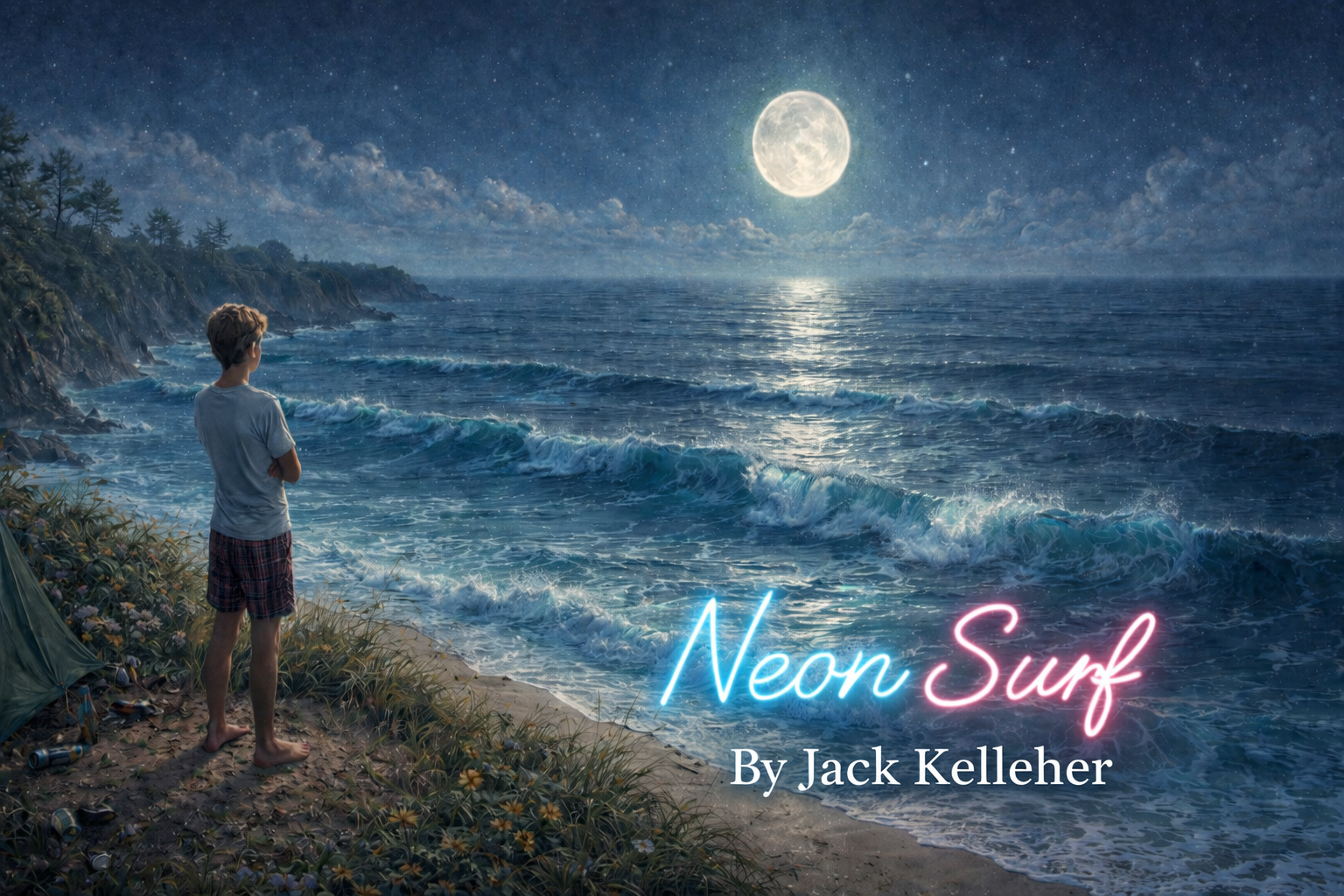
After they passed, Frankie crawled out and stood hugging himself in T-shirt and boxer shorts, a skinny kid shivering in the moonlight. He thought he’d look where they’d gone and, if he were lucky, see the girl naked.
Instead, from the bluff, he saw huge waves breaking a hundred yards offshore. As each crest rose and fell, phosphorescent plankton flared—rippling neon surges of blue-white light running along the wave’s spine for hundreds of yards. The moonlit surf was alive.
The night smelled of jasmine, bougainvillea, and the salt-green sea.
On that lost summer night, Frankie fell in love with the sea. For the first time, he knew what he wanted: a surfboard, an old pickup truck, and a girl whose voice tasted like cotton candy.